Water Softeners and Water Treatment in Guelph
Softener installation, softener repair, salt and resin service, reverse osmosis drinking water, and iron, sulphur and UV treatment for well water — across Guelph and Wellington County. Licensed installers, a written quote before any equipment is ordered, and a test of your actual water first.
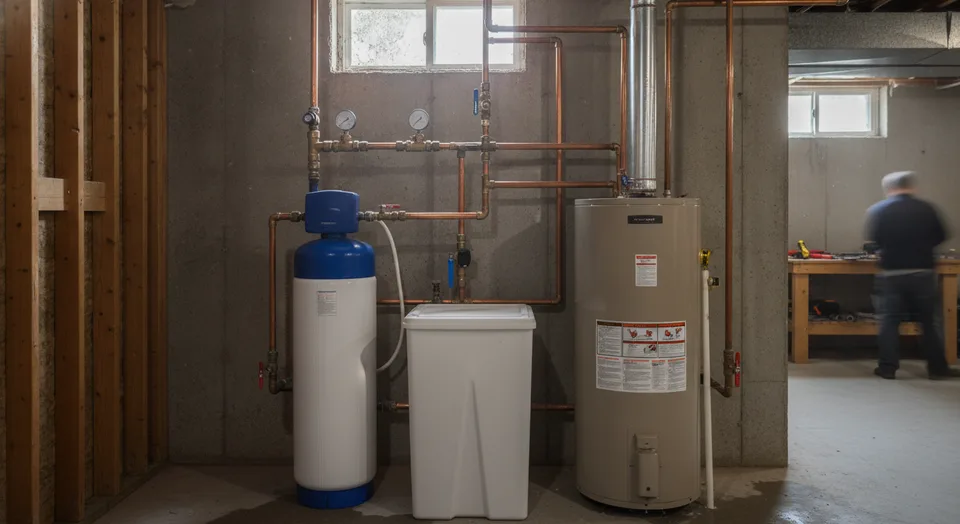
Guelph draws its municipal water from groundwater wells rather than a lake or a river, and that is the single fact that explains most of what people complain about in their homes here. Hard water is the default condition in this city, not an exception. It shows up as scale on taps, kettles and shower glass, spotting on glassware out of the dishwasher, soap and shampoo that will not lather, laundry that comes out stiff, and water heaters that give up years earlier than they should. Outside the city limits the picture widens again: properties in Puslinch, Aberfoyle, Morriston, Arkell, Eden Mills, Ariss, Rockwood and the rest of Guelph/Eramosa are on private wells, where hardness arrives alongside iron staining, a sulphur smell, sediment and the need for bacteriological testing. This is the booking line for a vetted Guelph water treatment company. The first step is always testing what is actually coming out of your tap. Nothing gets quoted, and nothing gets installed, before that.
What We Install and Service
Water softeners, drinking water systems and well water treatment for houses, townhouses and rural properties across Guelph and Wellington County.
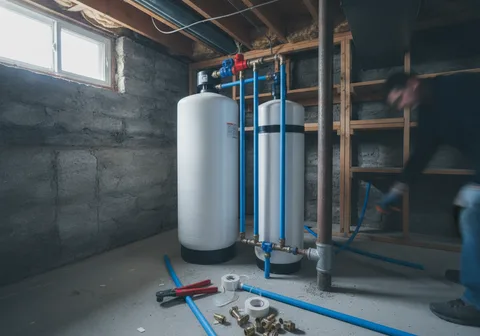
Water Softener Installation
A softener sized to your tested water and your actual household — installed with a proper bypass, drain and startup, not just swapped in where the old one sat.
Learn more →
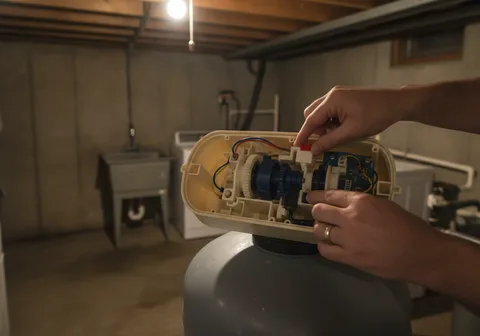
Water Softener Repair & Service
Softeners that stopped softening — salt bridges, dead resin, failed valves and brine draw problems — diagnosed properly instead of replaced by default.
Learn more →
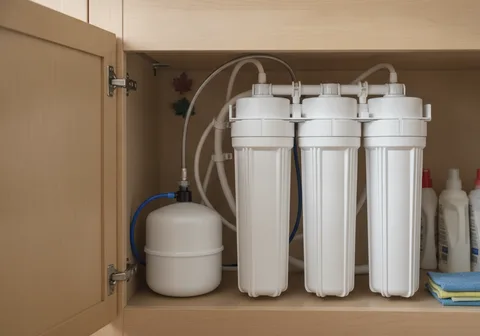
Reverse Osmosis Drinking Water
Under-sink reverse osmosis for drinking, cooking, coffee and ice — installed properly, plumbed to the fridge if you want it, and serviced on a schedule.
Learn more →
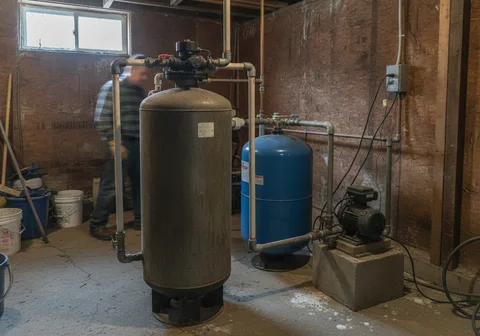
Iron & Sulphur Filtration
Orange staining, rotten-egg smell and sediment on a private well — treated in the right order, ahead of the softener rather than after it.
Learn more →
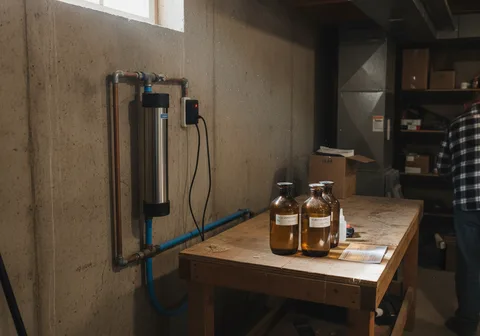
UV Disinfection & Well Testing
UV systems for private wells, plus the water testing that should come before and after them — installed with the pre-filtration UV actually needs to work.
Learn more →
Water Treatment in Guelph: What the Water Here Actually Does
Guelph is a groundwater city, and hardness is the baseline. Most Ontario cities of this size pull their drinking water from a lake or a river. Guelph does not — the supply comes from groundwater. Water that has spent time moving through limestone and dolostone picks up dissolved calcium and magnesium along the way, and that is what hard water is. You do not need a test to suspect it here; you need a test to size the equipment. The symptoms are the same in almost every house we get called to: white crust on the kettle element and the shower head, cloudy film on glassware, soap scum that returns on the tub within days of scrubbing it, shampoo that never quite rinses out, and towels that come out of the dryer feeling like cardboard. None of that is a cleaning problem. It is a water problem, and cleaning products only ever treat the symptom. And the expensive part is the part you cannot see. Scale does not stop at the fixtures. It builds on the inside of the water heater, on the heat exchanger of a tankless unit, in the dishwasher and the washing machine, and inside the small passages of faucet cartridges and shower valves. A layer of scale on a heating element means the appliance works harder to move the same heat, and it is the reason water heaters in this area often fail earlier than the homeowner expects. Tankless units are the least forgiving of all — the manufacturer's descaling schedule is not optional on Guelph water, and a lot of warranty problems trace straight back to it. When we look at a house, the water heater and the fixture cartridges tell us more about the history of the water than the homeowner usually can.
Older neighbourhoods: The Ward, Downtown and Old University. The housing stock around The Ward, downtown and the Old University area is largely pre-war and early post-war, and the softeners in those basements are frequently either undersized for the household or long past being serviced. The pattern we see over and over is a unit that has not been touched in years: the salt tank has a solid bridge of crusted salt across the top so the brine well is dry, the resin has been fouled by iron or chlorine and lost most of its capacity, and the owner has concluded the softener 'does not work' when it is really just starved or exhausted. These houses also tend to have a mix of plumbing vintages — galvanised remnants, copper, and newer PEX — which changes where the unit can go and how the bypass and drain have to be built.
Newer south-end builds: Westminster Woods, Clairfields, Pine Ridge, Grange Hill East. The south end has grown fast, and most of those houses came with a softener already in the basement. The problem is that builder-grade units are chosen on price, not on the water they are going to face. They are often undersized for the number of bathrooms in the house, they run on a fixed timer rather than on metered water use, and they regenerate on a schedule whether or not the capacity has been used. That wastes salt and water, and it still leaves hard water at the tap at the end of a heavy weekend. A lot of our south-end calls are three to eight years into one of those units, when the owner has finally connected the scale on the shower glass to the box in the basement.
Outside the city: private wells across Wellington County. Once you are past the city limits — Puslinch, Aberfoyle, Morriston, Arkell, Eden Mills, Ariss, Rockwood and the rest of Guelph/Eramosa — you are on a private well, and the problem set widens. Hardness is still there. On top of it you may have dissolved iron that turns orange once it hits air and stains the toilet tank, laundry and the driveway where the outdoor tap runs. You may have hydrogen sulphide, which is the rotten-egg smell people usually notice first in the hot water. You may have sediment and fine sand that chews up cartridges and valve seats. And unlike a municipal supply, nobody is testing it for you — bacteriological testing is the well owner's responsibility, and the results decide whether disinfection belongs in the plan at all. A well property gets a fuller test before anything is specified, because putting a softener on untreated iron water is how you ruin a set of resin in a year.
How the booking works. You call or send the form with the basics: your address or township, whether you are on city water or a private well, what you are seeing or smelling, how many bathrooms and people are in the house, and what equipment is down there now if anything. A test comes first. Then you get a written quote covering the equipment, the plumbing work, the drain and bypass, the startup and what the ongoing service looks like. Nobody orders anything until you have agreed to the number.
Serving Guelph & Surrounding Areas
The City of Guelph publishes information about the municipal water supply and where it comes from. Health Canada maintains the national drinking water quality guidelines that treatment decisions are measured against. If you are on a private well, Ontario sets the rules for well construction and maintenance, and Public Health Ontario handles bacteriological testing of private well water. Equipment certification is worth checking: the Water Quality Association explains what the performance certifications on a softener or drinking water system actually mean. Installations tie into your plumbing and must meet Ontario Building Code requirements, including how the unit is drained and backflow protected.
Frequently Asked Questions
Is Guelph water hard enough to need a softener?
Guelph's water comes from groundwater wells rather than a lake, and it is genuinely hard — hard water is the normal condition in this city, not a rare one. That is why scale on kettles and shower glass, spotted glassware and soap that will not lather are near-universal complaints in Guelph homes. Whether you need a softener is still a decision, not a foregone conclusion: it depends on your household, your appliances and how much the symptoms bother you. What we will not do is guess at a number. Your water gets tested and sized, and the quote follows from that.
How much does a water softener cost in Guelph?
Installed, most whole-home softeners for a Guelph house land in the $1,800 to $3,500 range depending on size, valve type and how much plumbing has to be built to tie it in. Well properties that also need iron or sulphur treatment run higher because that is a second and sometimes third piece of equipment. Planning ranges for everything are on the 2026 cost guide, and you get a firm written quote after the water is tested.
My softener is full of salt but the water still feels hard. What is wrong?
Usually one of three things. The salt has bridged — a hard crust has formed across the top of the tank so the water underneath never touches it and no brine is being made. The resin is exhausted or fouled, which happens faster on iron-bearing well water. Or the control valve is not regenerating properly, which on a timer unit can simply mean it is set for a household smaller than yours. All three are diagnosable in one visit, and two of the three are repairs rather than replacements.
Do I need a softener if I am on a well outside Guelph?
Almost certainly yes, and probably not only a softener. Wells across Puslinch, Guelph/Eramosa and the rest of Wellington County draw from the same hard groundwater, and they often bring iron, sulphur odour or sediment with it. The order matters: iron and sediment are dealt with ahead of the softener, not after, because sending untreated iron water through softener resin shortens its life considerably. That is why a well property gets a fuller test before anything is specified.
What is the difference between a softener and a reverse osmosis system?
A softener treats the whole house. It exchanges the calcium and magnesium that cause hardness and scale, which is what protects your water heater, fixtures and laundry. It is not a drinking water filter. Reverse osmosis is a point-of-use system, normally under the kitchen sink, that produces a small volume of highly filtered water for drinking, cooking, coffee and ice. Plenty of Guelph households end up with both, because they solve completely different problems.
Which areas do you cover?
All of Guelph — the south end through Westminster Woods, Clairfields, Pine Ridge and Grange Hill East, the older core around The Ward, downtown and Old University, and the west and north ends — plus the surrounding Wellington County communities: Puslinch, Aberfoyle, Morriston, Arkell, Eden Mills, Ariss, Rockwood and the rural parts of Guelph/Eramosa.
Ready to Get Started?
Call 548-290-9419 or send the form for a written quote for water treatment in Guelph.